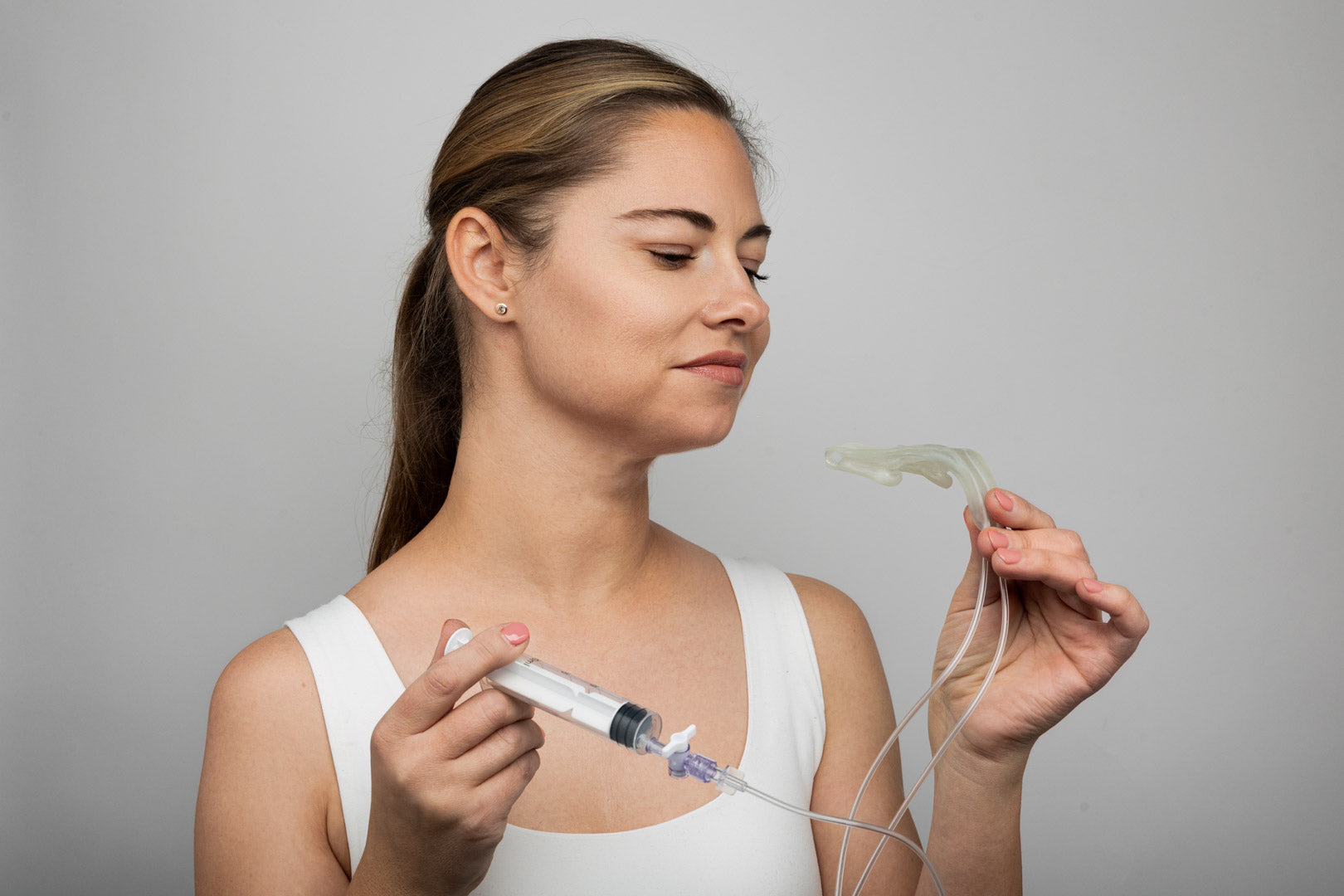
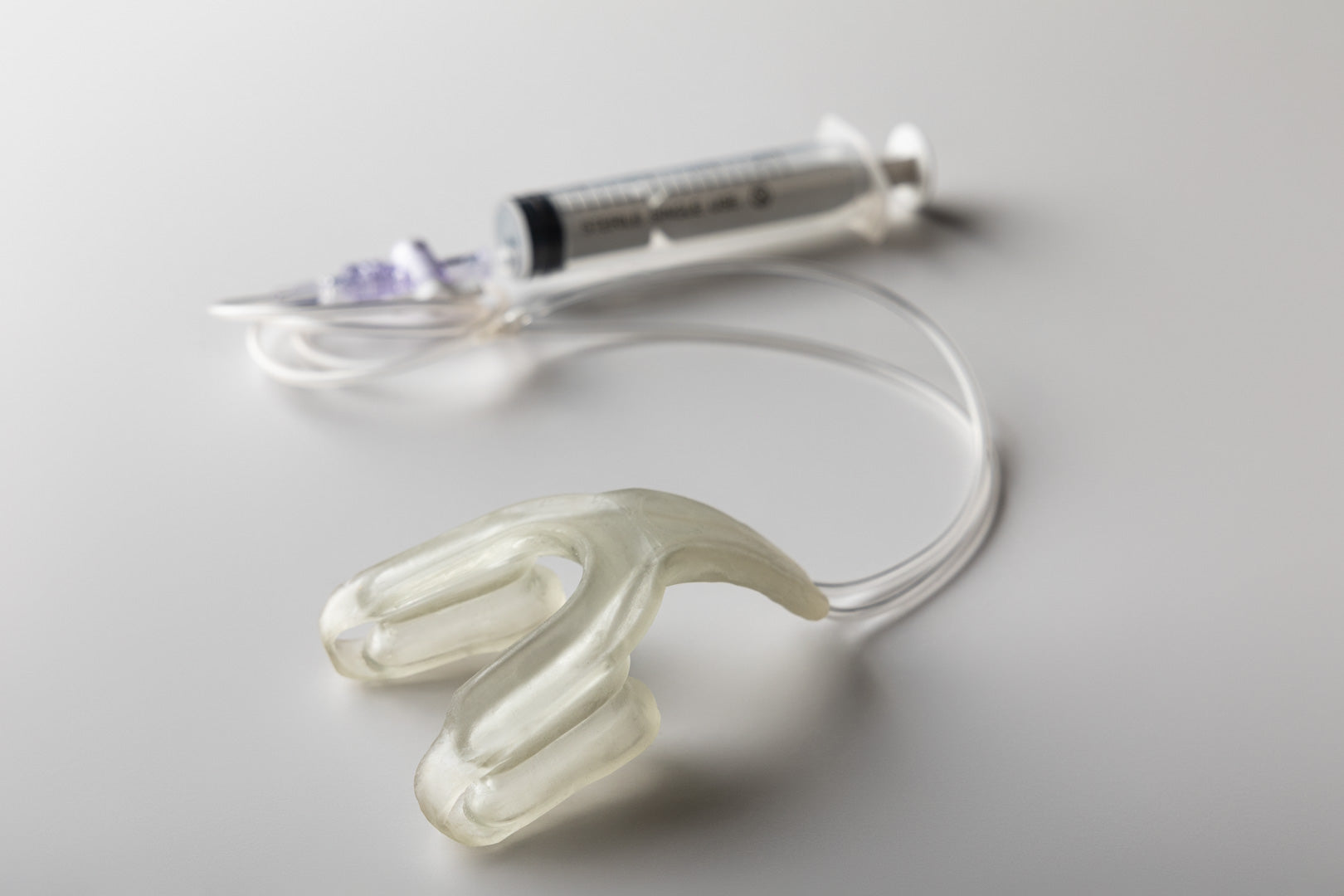
Jaw pain, stiffness, and limited jaw opening can impact everyday tasks — from speaking to enjoying a meal. The TMD Physio Care™ Jaw Exerciser is a clinically designed device that helps restore jaw mobility, increase muscular stability, and reduce the discomfort associated with temporomandibular disorders (TMD).
What sets these exercisers apart from generic jaw training products is their precise, controlled, air-based mechanism — enabling gentle, safe therapy tailored to each stage of recovery.
There are three levels of the TMD Physio Care™ device:
✔ Low-Force
✔ Medium-Force
✔ Hard-Force
Each version is developed to support progressive jaw rehabilitation under professional supervision.
Low vs Medium vs Hard — What’s the Difference?
| Feature | Low-Force | Medium-Force | Hard-Force |
|---|---|---|---|
| Minimum insertion mouth opening | ~15 mm (after removing 10 mL air) | ~17 mm (after removing 20 mL air) | ~20 mm (after removing 20 mL air) |
| Max comfortable opening achieved | ~32 mm (adding up to 14 mL air) | ~36 mm (adding up to 17 mL air) | ~36 mm (adding up to 19 mL air) |
| Max stretching force | Up to ~18 N | Up to ~24 N | Up to ~32 N |
| Max strengthening load | Up to ~22 N | Up to ~24 N | Up to ~34 N |
| Opening movement amplitude | Up to 17 mm | Up to 19 mm | Up to 16 mm |
| Target users | Early rehabilitation, high sensitivity | Moderate stiffness, improving strength | Late-stage rehab, strong stabilization |
Simple selection guide:
| Your current condition | Recommended device |
|---|---|
| Painful jaw, very limited opening | Low-Force |
| Improved mobility but still weakness or clicking | Medium-Force |
| Strong mobility, need better control & chewing power | Hard-Force |
How the Device Works
Each exerciser uses a precision air-inflated chamber:
-
Air removed → device gets smaller → easier insertion with limited opening
-
Air added → controlled stretching or resistance is applied
This allows users to progress safely without overstressing the temporomandibular joint.
Two Types of Therapy in One Device
1️⃣ Mobility Training — Increase Jaw Opening
Purpose: Restore pain-free range of motion
-
3–5 reps, 3–5× daily
-
Hold 10–15 sec (progress to 15–20 sec after 1–2 weeks)
-
Mild tension only — no pain, no forcing
2️⃣ Stability Training — Strength + Control
Purpose: Improve muscle balance & joint protection
-
5–10 reps, 1–2× daily
-
5-second isometric holds
-
Very small movement range (1–7 mm)
-
Smooth, symmetrical control — never clenching
Pro tip: Always perform stretching first, strengthening second
Who Should Use Which Version?
| Goal | Best Version |
|---|---|
| Reduce stiffness, restore basic mobility | Low-Force |
| Improve chewing control, stabilize joint | Medium-Force |
| Strengthen jaw for full daily function | Hard-Force |
Professional guidance ensures safe progression — especially for those with inflammation, clicking, past dislocations, or TMJ hypermobility.
Safety First
Do not begin without clinician approval if you have:
-
Acute jaw trauma or fracture
-
Active infection in mouth or jaw
-
Ankylosis (bony fusion of TMJ)
-
Wired jaws or immediate post-surgical restrictions
-
Recent implants without full healing
-
Severe osteoporosis of the jaw
Neurological disorders affecting jaw control require specialist oversight.
📌 Exercises must always remain pain-free and controlled.
Built for Medical Reliability
-
Medical-grade biocompatible resin
-
CE-marked according to EU MDR
-
Made in an FDA-registered, ISO 13485 certified facility
-
Withstands 3000+ cycle rehabilitation use
-
Designed for hygiene, comfort, and long-term safety
Cleaning is simple: rinse → soap → rinse → disinfect → air-dry.
The Bottom Line
TMD Physio Care™ helps patients:
✔ Stretch safely
✔ Strengthen efficiently
✔ Restore natural motion
✔ Prevent reinjury
And the three-level progression system ensures every patient has the right support throughout recovery.
Your jaw deserves therapy — not stress.
Choose the version that matches your current stage and work with a clinician to progress confidently.